

Easily Open and Edit GAEB Files: Your Guide to GAEB-Online 2025
In Germany’s modern construction industry, seamless data exchange is the cornerstone of project success. From tendering to final invoicing, precise, standardized information forms the foundation of efficient workflows. This is where the „Gemeinsamer Ausschuss Elektronik im Bauwesen“ (GAEB)—or the Joint Committee for Electronics in Construction—plays a pivotal role. GAEB files have become the undisputed standard for exchanging Bills of Quantities (BoQ) in Germany. However, handling these specialized GAEB Dateien often presents significant challenges.
Many users find these special file formats hard to use. Incompatible software, complex structures, and the risk of data loss from wrong editing often cause frustration and costly mistakes. This guide is designed to help you overcome these hurdles. We will explore the fundamentals of GAEB and introduce GAEB-Online 2025, a modern, streamlined solution for easily opening, editing, and managing all your GAEB files.
The Importance of GAEB Files in the Construction Industry
GAEB files are more than just digital documents; they represent the standardized language of the German construction sector. They let architects, planners, construction companies, and public clients exchange specifications, offers, and invoices in one standard format. This shared structure is crucial for every stage of a project. This standardization stops misunderstandings. It lowers administrative work. It also ensures clear and traceable communication during the whole project. A correctly processed GAEB file ensures that everyone—from the initial planner to the on-site contractor—is working from the same set of data. This alignment is the basis for fair tenders, accurate cost calculations, and smooth project execution from start to finish.
Challenges in dealing with GAEB data
Despite their importance, handling GAEB data is not always straightforward. A key challenge is the variety of different GAEB standards that have evolved over the years. Older versions like GAEB DA 1990 are often not directly compatible with the modern GAEB XML format. Attempting to open any GAEB Format file with unsuitable software, such as a generic text editor or a standard spreadsheet program, is a common pitfall. This almost always leads to the destruction of the file’s internal data structure, rendering it corrupt and unusable. This highlights the critical need for specialized software that understands the nuances of each format and ensures error-free viewing and editing.
GAEB-Online 2025 as the answer: simplicity meets efficiency
This is precisely where GAEB-Online 2025 provides a powerful solution. The software is engineered to manage the complexity of the GAEB standard behind the scenes, offering users a simple and intuitive interface for all related tasks. Instead of wrestling with technical specifications and compatibility issues, construction professionals can focus on their main skills. They do not have to deal with technical details and format problems. Their skills include calculating offers, adjusting quantities, and creating specifications. GAEB-Online 2025 acts as the perfect bridge, connecting the demanding technical requirements of the GAEB standard with the practical, everyday needs of construction professionals.
What is GAEB? Definition and purpose
GAEB, short for „Gemeinsamer Ausschuss Elektronik im Bauwesen,“ is a committee supported by leading organizations in both the private and public sectors of Germany’s construction industry. Its primary mission is to develop and maintain standards for electronic data exchange. The main goal is to create uniform rules for describing construction services within Bills of Quantities. This makes sure all project members—from planners to workers—use the same data and structures. It greatly improves efficiency and accuracy in the bidding, awarding, and billing process (AVA). This standardized framework is the engine that drives clarity and precision across the industry.
The evolution of GAEB standards: From GAEB DA 1985 to GAEB XML
The GAEB standard has continuously evolved over several decades to keep pace with technological advancements. Each new generation introduced enhanced capabilities but also resulted in different file formats, creating a landscape of versions that professionals must navigate today.
From GAEB DA 1985 to GAEB 90 and GAEB 2000
The journey began with GAEB DA 1985, a foundational format tailored to the technological constraints of its time. As digitalization advanced, the demands on construction data exchange grew, leading to the development of GAEB DA 1990, which improved compatibility and expanded functionality. This was later succeeded by GAEB DA 2000, a more robust version with an enhanced structure designed to handle the increasing complexity of modern construction projects. While older, these formats are still encountered in ongoing projects or archives, making backward compatibility essential.
GAEB XML: The current standard for digital data exchange
The latest and most significant evolution is the introduction of GAEB XML. This modern, XML-based GAEB Format is platform-independent, offering a universal language for exchanging construction data. GAEB-Online 2025 ensures that all parties involved in the construction process have a common basis for data processing. These parties are software developers, architects, and construction contractors. By leveraging the power of XML, this standard not only improves data integrity but also offers the flexibility needed to adapt to future technological shifts, such as Building Information Modeling (BIM). It is the current, recommended standard for all new projects.
The most important GAEB exchange phases explained
To ensure clarity, GAEB files are classified with a two-digit code that defines the specific „exchange phase“ of the project lifecycle. Understanding these phases is key to managing the tendering process correctly. The most common phases are:
- D81 / X81 (Leistungsbeschreibung – Service Description): A neutral description of services without any pricing.
- D83 / X83 (Angebotsaufforderung – Request for Quotation): The client sends this file to potential bidders. It contains the Bill of Quantities where bidders are expected to enter their prices.
- D84 / X84 (Angebotsabgabe – Quotation Submission): The bidder fills the D83/X83 file with their calculated prices and submits it back to the client as a D84/X84 file.
- D86 / X86 (Auftragserteilung – Order Award): After the contract is awarded, the finalized BoQ with the winning bid’s prices is sent to the successful contractor.
A modern solution for construction professionals
GAEB-Online 2025 is a specialized software solution built specifically for the needs of craftsmen, construction companies, architects, and engineers. It breaks away from overly complicated and bloated AVA programs by focusing on the essential task: opening, editing, and creating GAEB files quickly, easily, and without errors. Designed as an intuitive desktop application, it requires minimal training and guides users safely through every relevant workflow, from bid creation to project invoicing.
Overview of important features
The power of GAEB-Online 2025 lies in its focus on the core tasks of the GAEB workflow. Its most important features include:
- Universal Compatibility: Open and view all common GAEB formats, from the legacy GAEB DA 1990 and GAEB DA 2000 to the modern GAEB XML.
- Intuitive Editing: Easily adjust quantities, units, prices, and both short and long texts directly within the application.
- Streamlined Quoting: Enter your unit prices and quickly generate compliant D84/X84 offer files.
- Versatile Export Options: Convert GAEB files into common formats like Microsoft Excel for further analysis or PDF for documentation and printing.
- Built-in Validation: Ensure your files are GAEB-compliant before submission to prevent rejections and errors.
Step by step: Importing a GAEB file
Opening a GAEB file in GAEB-Online 2025 is designed to be effortless. Instead of navigating complex menus, you can simply drag and drop a file directly onto the program’s interface or use the classic „Open“ dialog. The software automatically detects the GAEB Format—whether it’s a legacy D83 file based on GAEB DA 1990 or a modern X83 file using GAEB XML—and imports the data correctly. The entire BoQ structure, including sections, items, and texts, is displayed clearly and immediately.
Intuitive user interface: Navigate and review a BoQ
Once imported, GAEB-Online 2025 presents the Bill of Quantities in a clear, tree-like structure that mirrors its official layout. You can easily navigate through different sections (titles) and view individual items. Key information such as item number, short text, quantity, unit, and long text is visible at a glance. This transparent presentation allows for a quick and thorough review of the tender documents before you begin the critical work of calculation and editing.
Free viewer functionality as a starting point
For users who only need to view and check GAEB files without editing them, GAEB-Online 2025 often provides a free trial or viewer functionality. This allows you to open Bills of Quantities and inspect their contents with confidence. It’s an ideal starting point to experience the software’s ease of use and verify its correct rendering of all GAEB formats before committing to the full suite of editing and calculation features.
Adjust quantities, prices, and texts: Here’s how
The true power of GAEB-Online 2025 is revealed in its editing capabilities. Once a Bill of Quantities is loaded, you can click directly into the relevant fields to make changes. Adjust quantities, correct units, or refine short and long texts with ease. For modern GAEB XML files, you can even apply rich text formatting to long descriptions to emphasize important details. All modifications are validated in real-time to ensure the file remains GAEB-compliant, with the software managing the complex data structure in the background.
Create and calculate quotes: Integration of calculation
Creating a bid is a core function. Within a request for quotation (D83/X83), you can enter your unit prices directly for each line item. GAEB-Online 2025 instantly computes the total price for the item, along with the subtotals for each section and the grand total for the entire BoQ. This direct in-app calculation is not only fast but also highly reliable, as automatic calculations reduce calculation errors. Once your pricing is complete, you can export the result as a compliant D84/X84 offer file with just a few clicks.
Record and check measurements
Beyond the bidding stage, GAEB-Online 2025 also supports the invoicing and payment phase. You can record measurements directly in the program by assigning the executed quantities to the corresponding BoQ items. This feature helps you maintain a clear overview of the services performed and creates a solid foundation for billing. It greatly simplifies the process of checking quantities and preparing progress or final invoices.
Export options: Convert GAEB files to other formats
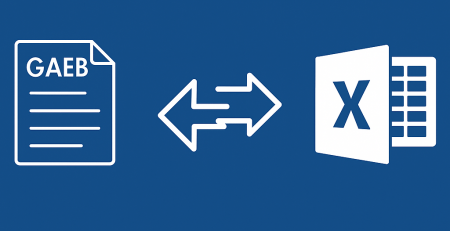
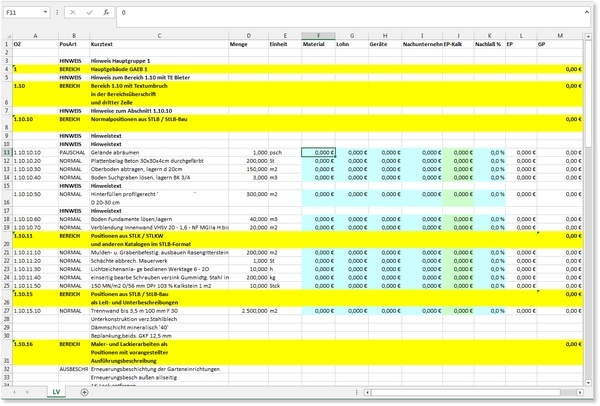
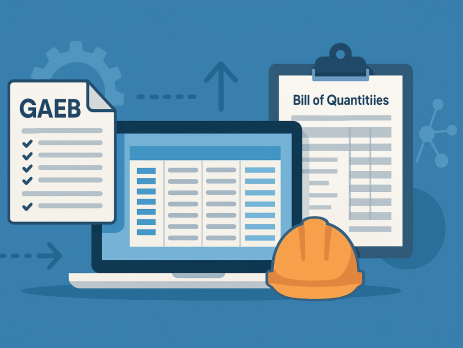
Flexibility is essential in any construction workflow. GAEB-Online 2025 allows you to export Bills of Quantities into various useful formats. The export to Microsoft Excel is particularly popular for internal calculations, detailed analysis, or sharing data with colleagues who do not have GAEB software. You can also generate professionally formatted PDF documents for printing or archiving. And most importantly, you can create a new, valid GAEB Datei in your desired target format for official submission.
Integrations, e.g., with Excel for advanced calculations (EFB calculation)
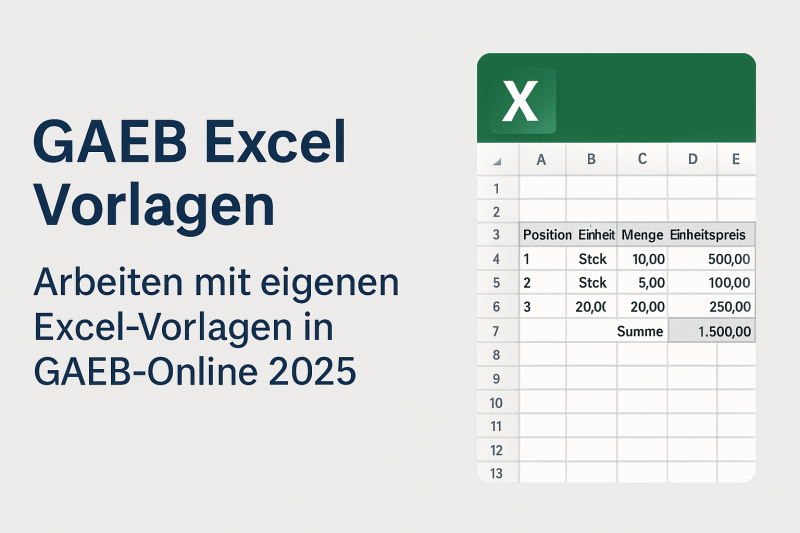
For complex calculations, such as those required for public tenders involving EFB price sheets („Einheitliche Formblätter Preise“), GAEB-Online 2025 offers a powerful connection with Microsoft Excel. You can export a specification to Excel. There, you can do detailed calculations with labor, material, and equipment costs. Then, you can import the final unit prices back into GAEB-Online 2025. This creates the D84 offer file. This workflow optimally combines the detailed calculation capabilities of Excel with the GAEB-compliant file generation of GAEB-Online 2025.
Digital signatures and secure data exchange
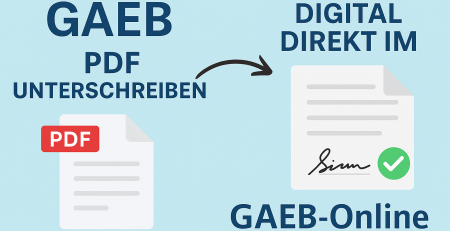
In an increasingly digital construction industry, the legally secure submission of bids is paramount. Modern versions of GAEB-Online 2025 support the integration of digital signatures. This allows you to apply a qualified electronic signature to your GAEB offer files, guaranteeing their authenticity and integrity. This is a critical advantage—and often a mandatory requirement—when participating in electronic procurement (e-tendering) procedures.
Time savings and increased efficiency
GAEB-Online 2025 is easy to use. It automates routine tasks. This cuts the time needed to work on specifications a lot. What previously took hours of manual data entry or error-prone editing in unsuitable programs can now be accomplished in minutes. This reclaimed time can be reinvested into improving the quality of your calculations and acquiring new projects.
Reduction of errors and improvement of data quality
Manual manipulation of GAEB files carries a high risk of error. GAEB-Online 2025 acts as a protective shield for your data. The software ensures that the GAEB structure is always preserved and that all generated files comply with official standards. Calculation mistakes are minimized through automated sums and totals. The result is high-quality, reliable bids that make a professional impression on clients.
Future-proofing and compatibility
GAEB-Online 2025 is continuously updated to align with the latest GAEB standards. This ensures you are always prepared for the future and can confidently process upcoming versions of the GAEB Format, especially new releases of GAEB XML. Its backward compatibility also guarantees that you can open and work with older GAEB Dateien from partners or archived projects. Furthermore, whether you work with AVA programs or planning tools, GAEB-Online 2025 enables seamless integration. It imports and exports your GAEB data without problems.
Conclusion
Standardized data exchange via GAEB is an indispensable pillar of efficiency in the German construction industry. However, the complexity of the various GAEB formats should not be a barrier to smooth workflows. GAEB-Online 2025 proves that handling Bills of Quantities can be simple, fast, and secure. The software resolves the central challenges of compatibility and error-prone editing by providing an intuitive, focused, and powerful platform for all GAEB-related tasks.
From quickly checking a tender to accurately calculating a bid and exporting it in multiple formats, GAEB-Online 2025 optimizes your entire workflow. You save valuable time, minimize costly errors, and increase the professionalism and quality of your work, positioning your business for greater success.
About us
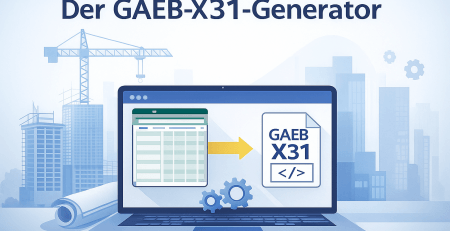
Ulrike Braun develops software related to GAEB tenders. The products are already used by over 5,000 customers for quick calculations, for example with MS Excel®, and for electronic bidding in GAEB DA84 format. The solutions offer support for calculations using EFB price sheets, measurements, and quantity determination as DA11 and GAEB X31, as well as invoicing as GAEB X89 or XRechnung 3.0.
GAEB-Online 2025 is software designed for electronic data exchange in the construction industry. With GAEB-Online 2025, users can create quotations and service specifications in Microsoft Excel. The software also offers various extensions that can be used to create measurements and invoices directly in Excel or to fill out the EFB221 and 223 price sheets. The software is primarily aimed at tradespeople and construction companies.